
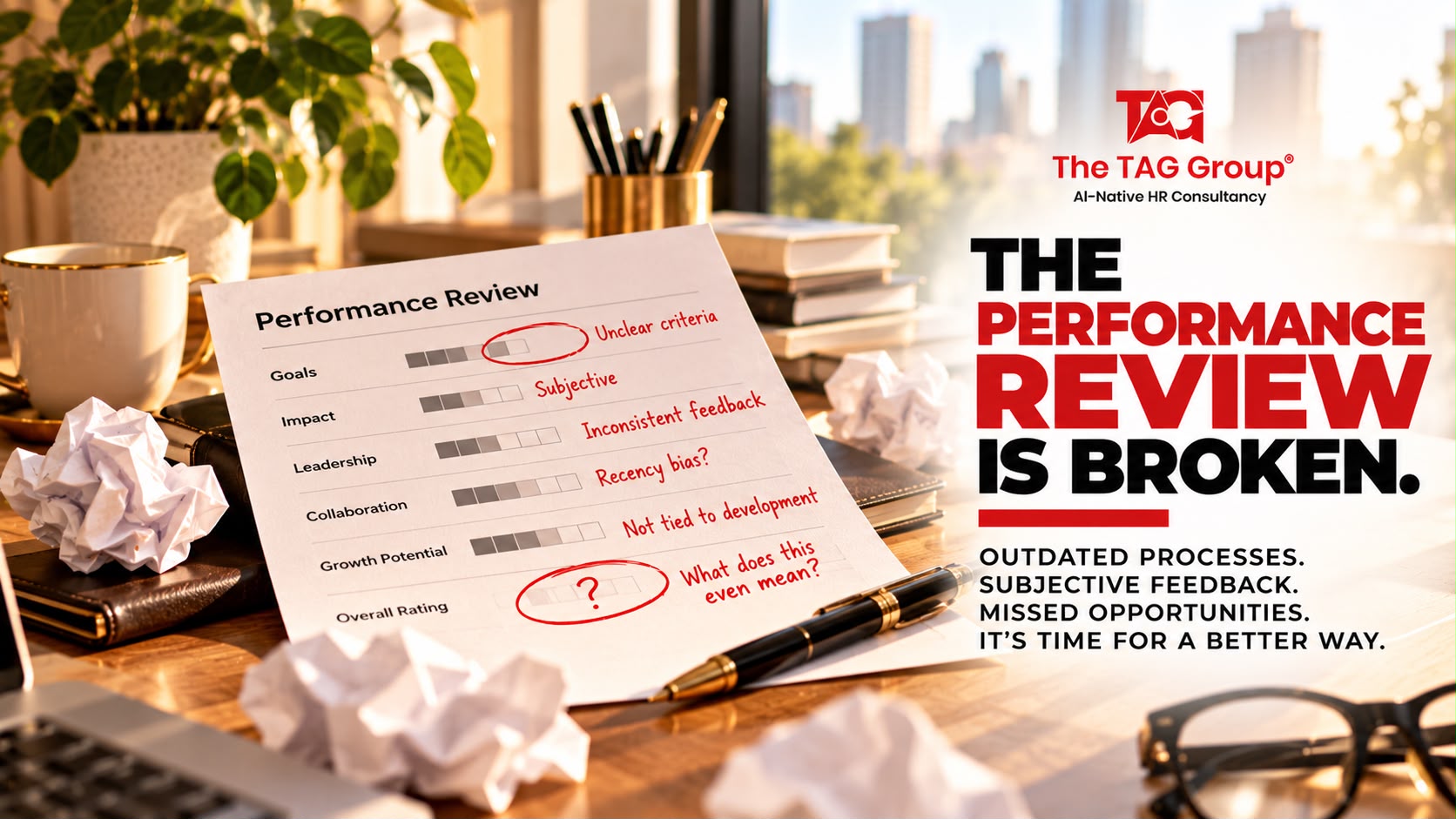
The annual performance review is a ritual almost every company still performs and almost no employee still believes in.
The rubrics get filled out. The self-assessments get submitted. The calibration meetings happen. The ratings get distributed. And at the end of it, the manager sits across from the employee and shares feedback the employee has been waiting nine months to hear about work they finished eight months ago.
Everyone knows this is not development. Everyone participates in it anyway. Because the alternative feels harder, and because the calendar has always had a review cycle on it, and because HR needs the ratings for compensation planning.
There is a better version of this. It is not the one most companies are running.
Why the annual review does not build anyone
Feedback loses more than half its value the moment it is delayed. A behavior corrected in the week it happened is a lesson. A behavior corrected six months later is a grievance. The employee cannot remember the specific moment being referenced. The manager is reconstructing something from a mental note they took at the time. The conversation lands as judgment, not coaching.
Meanwhile, the annual review has to do multiple jobs badly at the same time. It is trying to be development feedback, compensation justification, promotion signal, and legal documentation, all in one conversation. Any conversation trying to do four jobs at once does none of them well.
The manager knows this. The employee knows this. Everyone is complicit in the theater because breaking the ritual feels harder than performing it.
Feedback loses more than half its value the moment it is delayed. A behavior corrected in the week it happened is a lesson. A behavior corrected six months later is a grievance.
What actually builds people
The manager who develops their team does it in the weekly one-on-one. Not the quarterly check-in. Not the annual review. The recurring thirty minutes where they consistently name what is working, name what is not, and coach through the specific decision the employee is currently wrestling with.
That conversation has three parts. What have you shipped since we last talked? What is the hardest decision on your plate right now? What is one thing I can do to make this easier? It takes twenty-five minutes and it produces more growth than any performance review anyone will ever run.
The reason more managers do not run this cadence is not because they do not know how. It is because they have been given twelve direct reports and thirty hours of internal meetings a week and they are triaging their calendar accordingly. Development work is the first thing that gets cut when the calendar gets crowded.
What to do about the annual review
Do not eliminate it. Companies that eliminate performance reviews entirely usually end up with worse documentation, weaker compensation defensibility, and less career clarity. That is not the answer either.
Separate the jobs. Let the annual review do the two things it can do well: create a documented record of the year, and inform compensation decisions. Let the weekly one-on-one do the development work it was always supposed to do. Let the quarterly conversation do the career-arc calibration that neither the weekly nor the annual can hold.
Give your managers the training and the time to run all three. The training is not hard. The time is the actual investment. Managers who are protected from meeting overload can actually develop the people who report to them. Managers who are drowning in internal meetings cannot.
The version most companies avoid
The performance review is not going to fix your development problem. Neither is a new tool, a new framework, or a new rubric. The development problem is a calendar problem, a manager capability problem, and a leadership priority problem. It is fixed by protecting one-on-one time as sacred, coaching managers to run those conversations well, and making it clear that developing people is part of the job, not something to squeeze in between the meetings that actually got calendared.
That is a real investment. It is also the one that actually builds people.