
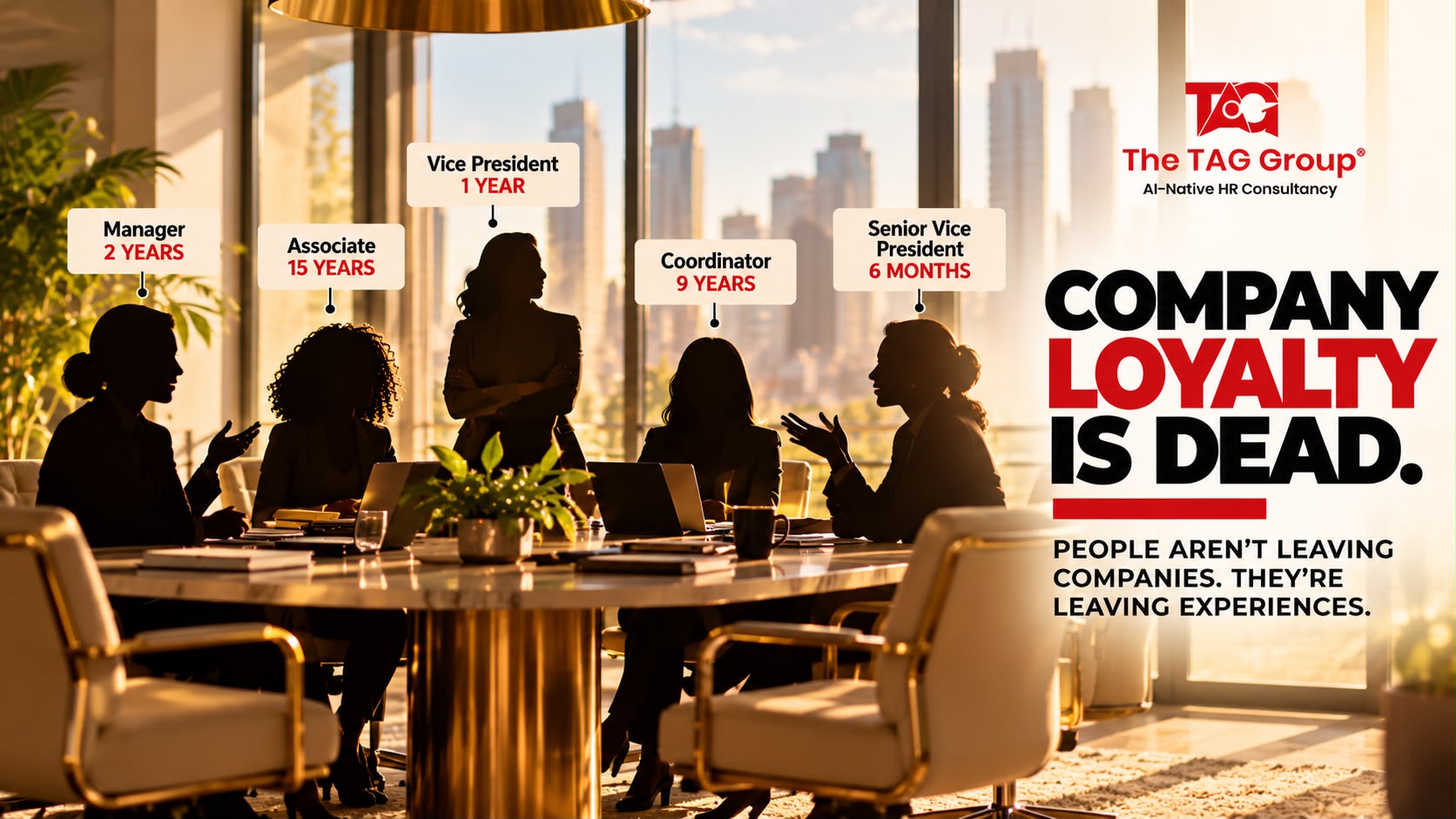
The complaint we hear most often from CEOs in 2026 is that employees are not loyal anymore.
They quit for a fifteen percent raise. They leave in the middle of a project. They accept an offer without ever having a conversation about staying. They post about their new roles on LinkedIn a week later and describe their old employer in the past tense, as if the last three years happened to someone else.
The framing behind this complaint is usually some version of, ‘people used to be loyal to the companies they worked for. What happened?’
What happened is that companies stopped being loyal first, and it took twenty years for the workforce to fully catch up.
What the old contract actually was
For most of the twentieth century, the implicit deal between an employer and an employee was straightforward. You give the company your career. In exchange, the company gives you stability, a pension, health coverage, and a predictable ladder to climb. Both sides held up their end. Both sides expected to be together for decades.
That deal died in the 1980s and 1990s. Pensions were replaced with 401(k)s. Lifetime employment was replaced with restructurings, layoffs, and the corporate discovery that treating labor as a variable cost was more shareholder-friendly than treating it as a long-term commitment.
The workforce noticed. Slowly at first. Then all at once.
Company loyalty is not dead. What died is the one-sided kind, where the employee stayed loyal to a company that was never going to stay loyal to them.
What replaced it
The new deal that emerged is honest but transactional. The employee gives the company their expertise, effort, and calendar for as long as the arrangement serves both sides. The company pays market comp, invests in the employee’s growth, and gives them work that builds their career. When either side stops holding up their end, the arrangement ends. Nobody is surprised. Nobody is offended.
This new deal is often described as the death of loyalty. But it is not. It is the death of a specific kind of loyalty. The one-sided kind, where the employee stayed loyal to a company that was never going to stay loyal to them.
What is emerging in its place is a different kind of loyalty. Reciprocal. Explicit. Time-limited. Loyalty for as long as the relationship is producing value on both sides, and the maturity to end it cleanly when it stops.
Why founders resent this
The founder who complains that employees are not loyal is usually one of two people. They are either genuinely investing in their team and confused about why loyalty is not automatic. Or they are quietly expecting a level of commitment they are not returning.
The first founder is fixable. The reciprocal deal works for them. They just need to name it explicitly. Communicate the growth trajectory. Invest in the manager development that keeps their people learning. Pay market. Handle the hard conversations well. Their retention will be strong because the deal on their side is real.
The second founder cannot be fixed by any retention program. They are hoping their people will stay out of a sense of obligation the founder is not returning. That deal died three decades ago. The people who stay in it now are usually the ones who cannot leave, not the ones the founder actually wants to keep.
What actually keeps A players now
The A players in 2026 stay at companies where they are learning, growing, respected, and paid at market. When any one of those breaks, they start looking. When two break, they leave. This is not a moral failing. It is the honest math of a workforce that watched its parents get laid off and drew the correct conclusions.
Companies that build for this reality are winning. They stop trying to buy loyalty with ping-pong tables and stock options. They start building a real employee experience that is worth someone’s next three years. When those three years are up, some people re-up. Others leave for the next chapter. Both are healthy outcomes.
Company loyalty is dead. What replaced it is honest reciprocity. And the companies who understand the difference are the ones building the best teams of the next decade.