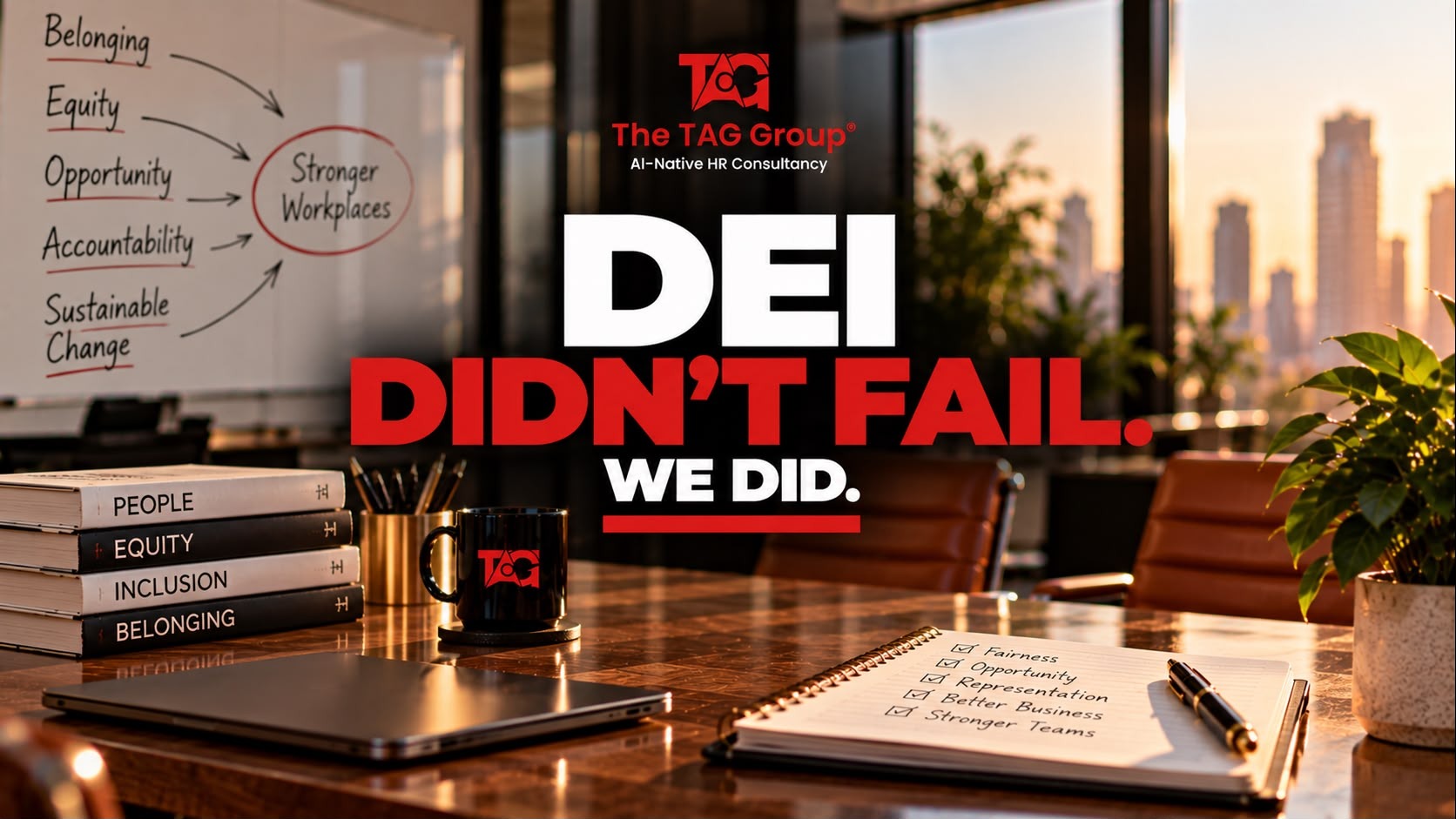
The current political climate has made DEI a difficult topic for companies to talk about publicly.
Programs are being wound down. Roles are being restructured out of existence. Public commitments that were loud in 2020 are being quietly revised in 2026. The narrative building in public is that DEI failed, or that it was misguided from the start, or that it was a compliance-driven fad that has run its course.
None of that is true. What is true is that most companies did DEI badly, in a way that was never going to produce the outcomes they claimed to want, and now they are treating the failure of their bad implementation as evidence that the underlying work does not matter.
It matters. It just was not what most companies were doing.
What most DEI programs actually were
Most DEI programs were marketing. A public commitment. A hire. A statement. A training. A resource group. A carefully worded blog post. All of it visible. Almost none of it operational.
The organizations that treated DEI as a marketing exercise were the ones that got the loudest credit in 2020 and the harshest backlash in 2025. The underlying practices at those companies never changed. The hiring rubric was still biased. The promotion decisions still favored the same demographics. The pay equity was still broken. The manager training was still generic. The values on the wall still did not match the behavior in the room.
When the political winds shifted, those companies had nothing to defend. Because they had never done the actual work. The failure was not of the concept. It was of the execution. And now the concept is being blamed for the execution’s failure.
Most companies did DEI badly, in a way that was never going to produce the outcomes they claimed to want. Now they are treating the failure of their bad implementation as evidence that the underlying work does not matter.
What actual inclusion work looks like
Real inclusion work is operational, not performative.
It looks like a hiring process that has been audited for the specific ways bias creeps in, and redesigned to counteract them. It looks like a promotion process that documents the criteria clearly enough that a manager cannot pattern-match their way to the same demographics every cycle. It looks like a pay equity audit that surfaces the differences that will not survive scrutiny, and closes them. It looks like manager training that teaches specific behaviors, not just awareness. It looks like leadership that models the behavior it says it wants.
None of that requires a public statement. All of it produces measurable outcomes. And the companies still doing this work quietly in 2026 are winning talent that other companies cannot reach, because the reputation for actually doing it right compounds when the public conversation is doing something else.
Why companies stopped
The honest answer is fear. Fear of political backlash. Fear of activist shareholders. Fear of getting sued for having a program. Fear of getting sued for not having one. Fear of being written about the wrong way in the wrong publication.
That fear is understandable. It is also the reason so many companies are throwing out the operational work along with the marketing exercise. The marketing was risky. The operational work is not. A well-designed hiring rubric is not political. A well-run pay equity audit is not political. A manager training program that teaches specific behaviors is not political. These are all just good business practices, and they were before anyone started calling them DEI, and they will be after the term stops being used.
The companies that quietly kept doing the operational work are the ones who will look prepared and thoughtful five years from now. The companies that panicked and dropped everything are the ones who will have to explain, in the next hiring cycle, why their leadership demographics look exactly like they did in 2015.
What to actually do
Separate the marketing from the operational. Retire the visible commitments that were not backed by real work. Do not defend a public statement that your practices never lived up to. That is worth letting go of.
But keep the operational work. Audit your hiring process. Audit your pay equity. Invest in the manager training that produces the behaviors you want. Document the promotion criteria clearly. Hold your leadership team accountable to the behaviors that shape the company culture. All of this can be done without a single external statement. All of it produces the outcomes the marketing was claiming to deliver.
The companies that do this quietly and consistently over the next decade will be the ones with the strongest, most diverse leadership teams in their industries. Not because they made the loudest commitments. Because they did the actual work when nobody was watching.
DEI did not fail. Companies failed at it. The distinction matters, and the work continues.