
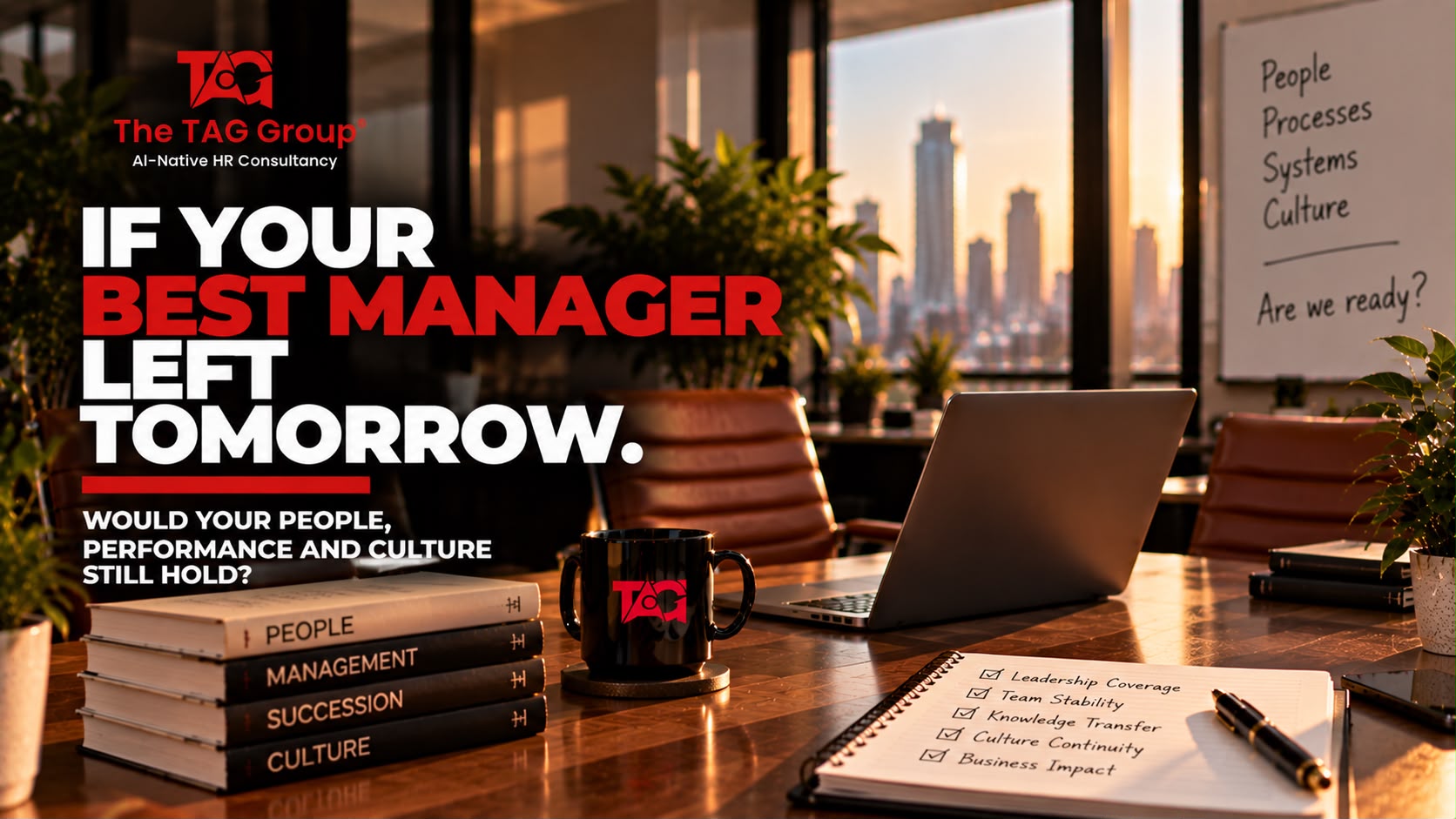
Every company has one.
The manager whose team consistently outperforms the ones next to them. Whose one-on-ones actually feel like development conversations. Whose direct reports get promoted more often. Whose engagement scores are always at the top of the calibration. Whose people talk about them, years later, as the best manager they ever had.
Ask leadership what makes this manager different, and you will get the same answer at every company. They are just really good with people. They have a knack for it. They are naturally gifted. They have that thing.
None of those explanations are useful. And every one of them is a warning sign.
The problem with undocumented management
When leadership cannot articulate what your best manager actually does differently, one of two things is true. Either you are attributing the outcomes to magic, when they are actually the product of specific behaviors that could be taught. Or the manager genuinely is doing something instinctive that only they can do, in which case the company has built a fragile point of failure that walks out the door the day they leave.
Both versions are the same problem. The company is not learning from its best. And the day the best leaves, the company loses more than one person. It loses the pattern that person was quietly generating and nobody had bothered to capture.
What good managers actually do
The great managers we have studied over the last twenty years all do a specific set of things. They are not naturally gifted. They are running a set of practices, most of which they could name if you sat them down and asked.
They have a real one-on-one cadence, protected and used well. They give feedback in the week it is earned, not in the review cycle. They understand what each of their direct reports is trying to build, not just what they are trying to deliver. They calibrate their feedback carefully so it lands as coaching, not judgment. They handle underperformance directly, early, and with dignity. They advocate for their team internally in the meetings their team is not in. They make promotion decisions based on documented performance, not vibes. They protect their team from the internal politics that would otherwise consume their focus.
None of that is magic. All of it is teachable. And the reason it is not being taught is because the company never bothered to name what its best manager was actually doing.
When leadership cannot articulate what your best manager actually does differently, either you are attributing outcomes to magic, or you have built a point of failure that walks out the door the day they leave.
How to build the toolkit
Interview your best managers. Actually sit down with them and ask them to walk through their week in specific detail. How do they structure their one-on-ones? How do they prep for them? How do they document conversations? How do they decide when to give feedback in the moment versus save it for a scheduled conversation? What questions do they ask their team members that other managers do not? What do they refuse to do?
Half of the answers will be things they had never articulated before. The other half will be things you can teach every manager in your company inside a quarter.
The result is a manager toolkit that is grounded in what actually works at your company, not what generic leadership development programs prescribe. It becomes the onboarding curriculum for every new manager. It becomes the coaching framework for every one your existing managers are struggling with. It becomes the standard you can hold managers to, because it is documented instead of implied.
Why most companies never do this
The reason most companies never build this is not because they do not know it would help. It is because it requires an investment of hours from their busiest people to interview their most valuable manager, transcribe the practices, and codify them into training material. That work has no immediate deadline attached to it. It always loses to the thing that does.
The companies that make the investment produce management capability that outlasts any one leader. The companies that do not produce great managers who leave, and next generations of managers who never learn what the great ones knew.
Your best manager is not magic. They are running a playbook. The question is whether anyone else at your company can read it after they are gone.