
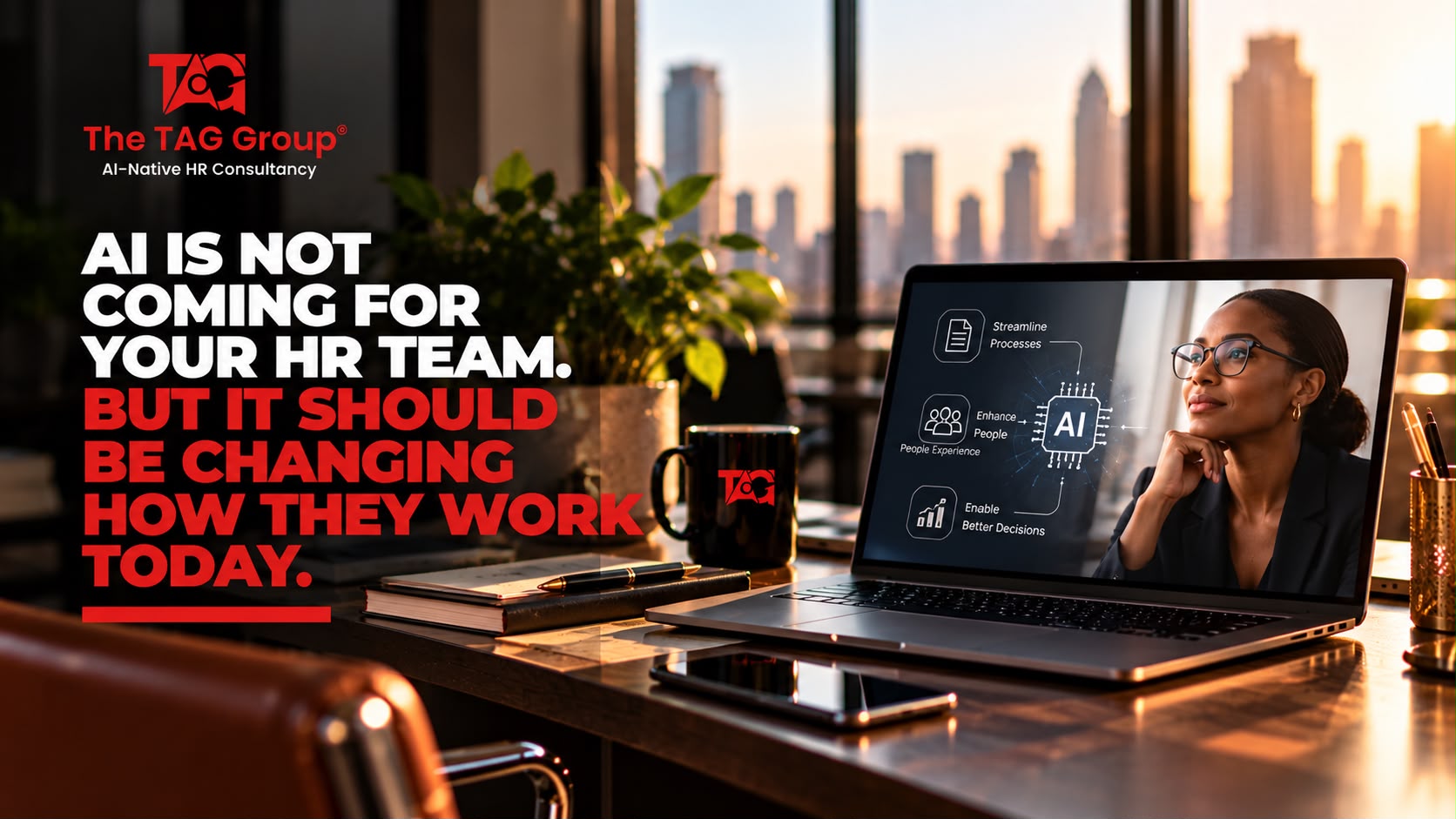
The AI panic in HR is misdirected.
Every conference in 2026 has at least one session on whether AI will replace HR. Every LinkedIn thread eventually loops back to it. Every People leader has been asked by their CEO some version of the question, ‘so how are we using AI in HR?’
The question underneath all of this is fear. Fear about job security. Fear about relevance. Fear about being the last function to modernize.
But the real question is not whether AI will replace your HR team. It will not. The real question is whether your HR team is using AI to make better decisions today than they were making six months ago. And for almost every company we talk to, the honest answer is no.
AI cannot sit across from a founder and tell him the truth about his own leadership. That is the judgment layer. That is where People work has always earned its keep.
What AI is actually good at in HR right now
AI is exceptionally good at the drafting layer of People work. Policy language. Handbook sections. First-pass job descriptions. Interview question banks. Engagement survey synthesis. Comp band benchmarking. Termination letter templates. The whole category of work that used to consume the majority of an HR generalist’s week.
Companies that have integrated AI into these workflows are producing the same quality of output in a fraction of the time. A policy update that used to take two weeks now takes an afternoon. A survey synthesis that used to take a week now takes an hour. A first-pass job description that used to eat half a day now takes fifteen minutes.
That freed-up time is the real prize. Not because it eliminates roles, but because it moves the People function up the value chain.
What AI is not good at
AI cannot sit across from a founder and tell him the truth about his own leadership. AI cannot read a leadership room where the co-founder tension is the actual reason the engagement scores are dropping. AI cannot decide whether the high performer’s behavior has crossed the line yet. AI cannot judge whether the candidate who nailed the case study is actually the right cultural addition for the team you are trying to build.
That is the judgment layer. That is where People work has always earned its keep. And it is the part that gets harder to reach when your team is buried in drafting work that could have been done in an afternoon.
What to actually do about it
The People function of 2027 will not look like the one you have now. Not because AI took the jobs, but because the shape of the work changed. The People teams that thrive will be the ones who moved the drafting work to AI early and reinvested the freed-up capacity into the judgment work that only they can do. The teams that lag will be the ones who defended the drafting work because it was familiar, and who found themselves outpaced by peers who moved on.
The first step is not implementing an AI tool. The first step is auditing what your team actually spends its time on this week, and honestly separating the work AI could do in an afternoon from the work that requires human judgment. Once that map is on the table, the transition strategy becomes obvious.
The People function is not going away. It is evolving into what it was always supposed to be. The AI transition is what forces that evolution. The question is whether your team leads it or gets pulled along by it.